If you are an accountant in Australia, a regulatory change is coming that will fundamentally transform how you onboard and verify clients.
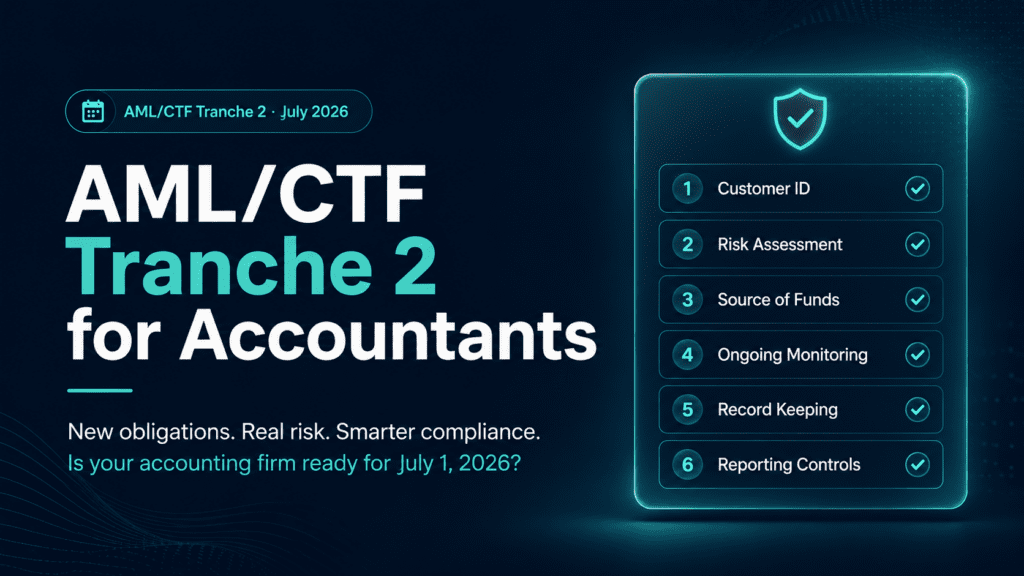
From July 1, 2026, accountants providing certain professional services will become “reporting entities” under Australia’s Anti-Money Laundering and Counter-Terrorism Financing (AML/CTF) laws. This is known as Tranche 2.
This is not optional. It is law. And the penalties for non-compliance are significant: up to $6.6 million for individuals and $33 million for businesses.This article breaks down exactly what is changing, why it matters, and what you need to do — including a practical solution that Australian accounting firms are already using to become compliant without adding hours to their workday.
What Is AML/CTF Tranche 2?
Australia’s AML/CTF Act was passed in 2006 and originally regulated financial services, gambling, and bullion services — this is referred to as Tranche 1.
Tranche 2 extends these obligations to “gatekeeper” professions — professionals who are often exploited to facilitate money laundering because they handle large transactions, create complex structures, or have access to sensitive financial systems.
The newly regulated professions include:
-
1.Managing client money, accounts, securities, or assets — other than fees for professional services.
-
2.Buying, selling, or transferring a business — assisting with transactions involving the sale or acquisition of a legal entity.
-
3.Creating, operating, or managing legal entities — companies, trusts, SMSFs, and other legal arrangements.
-
4.Real estate transactions — assisting with buying, selling, or transferring property.
-
5.Providing a registered office address — one of the most commonly overlooked services that captures accountants.
-
6.Acting as a nominee director, secretary, or trustee.
The goal is to align Australia with international standards set by the Financial Action Task Force (FATF) and close regulatory gaps that criminals have exploited for years. This reform will bring approximately 80,000 to 100,000 new reporting entities under AUSTRAC’s regulation.
What Are ‘Designated Services’ for Accountants?
You do not need to be a large firm to be affected. If you provide even one designated service, you become a reporting entity. Size does not matter — sole practitioners and large national firms alike are captured.Designated services commonly provided by accountants include:
-
Accountants (providing designated services)
-
Lawyers and conveyancers
-
Real estate agents and property developers
-
Trust and company service providers
-
Dealers in precious metals and stones
What Are Your New Obligations?
If you provide designated services, here is what you must have in place by July 1, 2026:
Key Dates You Cannot Miss
Why Are Accountants Being Targeted?
According to AUSTRAC, accountants are frequently exploited for money laundering in Australia because they:
-
Handle large volumes of physical currency on behalf of clients
-
Facilitate international transactions and cross-border fund movements
-
Create complex legal structures — trusts, SMSFs, companies — that can obscure the origins of illicit funds
-
Are trusted professionals whose involvement lends legitimacy to financial transactions
Your role is critical in identifying and responding to money laundering and terrorism financing risks. An effective AML/CTF program protects your practice from being misused for financial crime and protects you from serious regulatory consequences.
What This Means Practically for Your Firm
It is worth being direct about this: the compliance burden is significant. Here is what you are looking at in practice:
-
Handle large volumes of physical currency on behalf of clients
-
Facilitate international transactions and cross-border fund movements
-
Create complex legal structures — trusts, SMSFs, companies — that can obscure the origins of illicit funds
-
Are trusted professionals whose involvement lends legitimacy to financial transactions
Done manually, this verification process can take 30 to 45 minutes per client. Multiply that by your entire client base and you are looking at hundreds of hours of additional administrative work before you have provided a single hour of billable advice.
AUSTRAC Resources for Accounting Firms
AUSTRAC has released sector-specific guidance to help accountants prepare. Key resources include:
-
AML/CTF Reform Hub — austrac.gov.au/amlctf-reform — overview of all regulatory changes
-
Accountant Guidance — austrac.gov.au/reforms/sector-specific-guidance/accountant-guidance
-
Accounting Program Starter Kit — a template AML/CTF program designed for smaller practices with 15 or fewer personnel
-
Check If You Are Regulated Tool — an online questionnaire to determine your specific obligations
These Starter Kit is designed for practices with 15 or fewer personnel that only provide professional designated services. Larger practices with more complex risk profiles will need to develop customised AML/CTF programs tailored to their specific client base and service mix.
How Can You Prepare Without Drowning in Admin?
Here is the practical reality: if you try to manage all of this manually, you will spend hundreds of hours over the coming months simply processing client verifications. That is time taken directly away from billable work.
The good news is that you do not have to do it manually.
At Nex Automate, we have built VERA — our Client Verification Automation tool specifically designed to help accounting firms meet their new AML/CTF obligations without adding hours to their workday.
-
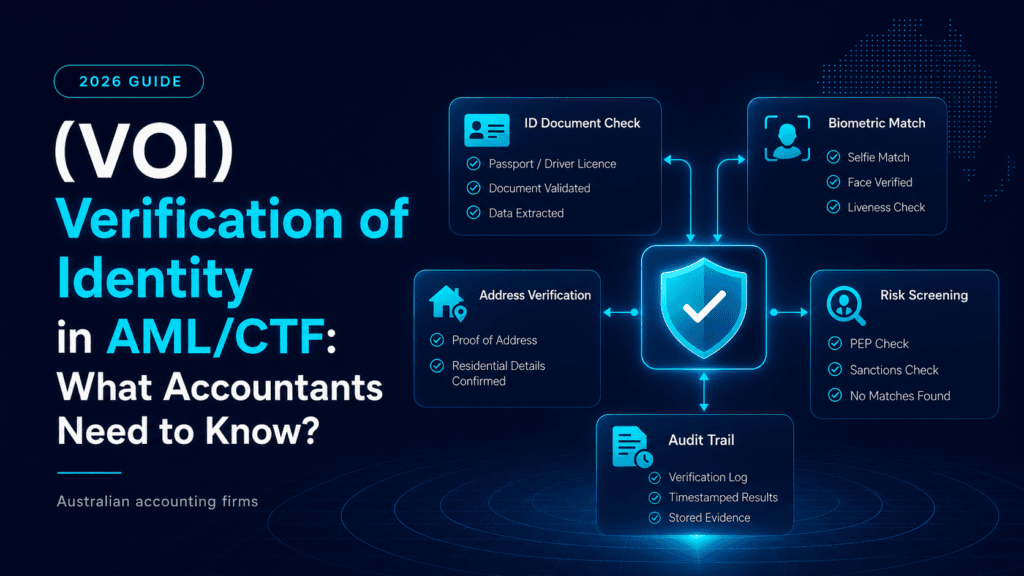
VOI Checks — Face-ID and document verification, fully automated.
-
AML/CTF Screening and Risk Scoring — compliance checks completed automatically for every client.
-
Client Record and Job Setup — creates records in your practice management system automatically.
-
Document Automation — engagement letters and ethical letters generated without manual input.
-
Tax Agent Portal Integration — verified clients added to your ATO portal seamlessly.
-
Direct Debit Setup — complete client onboarding from start to finish in one workflow.
What takes 30 to 45 minutes manually now takes approximately 3 minutes. VERA processes tasks 3 times faster than manual human capabilities with unmatched precision — and operates fully within your company’s security and data policies.
Be compliance-ready before July 1, 2026 — without hiring extra staff or working longer hours.